
What a Property Survey Is and What It Is Not
What a Property Survey Is, and What It Is Not
From time to time, I come across a common misunderstanding about property surveys. Some clients think that a surveyor has an almost “X-ray vision” ability to see everything hidden inside a building. While the humorous illustration above might suggest that idea, the reality is quite different.
A professional property survey is a careful, structured inspection carried out according to recognised standards, but it is not a form of superhuman investigation. Understanding what a survey is designed to do, and equally what it cannot do, helps set realistic expectations for anyone purchasing a property.
At its core, a survey is a detailed visual assessment of the condition of a property on the day of inspection. The surveyor examines the building inside and outside, as far as it is reasonably accessible, to identify visible defects, signs of deterioration, and potential risks that may affect the structure or its long-term upkeep. The inspection is thorough but non-invasive, meaning the surveyor does not dismantle parts of the building or open up the structure to see what lies behind finishes or inside concealed spaces.
This principle is fundamental to how surveys are carried out. Surveyors inspect areas that are normally accessible and visible during everyday use of the property. They do not remove floorboards, lift fitted carpets, dismantle joinery, move heavy furniture, open sealed panels, or interfere with building fabric. Because of this, defects hidden behind wall finishes, insulation, ceilings, or other coverings may not be visible during the inspection. For this reason, a survey should always be seen as a professional assessment of visible condition rather than a guarantee that no hidden defects exist.
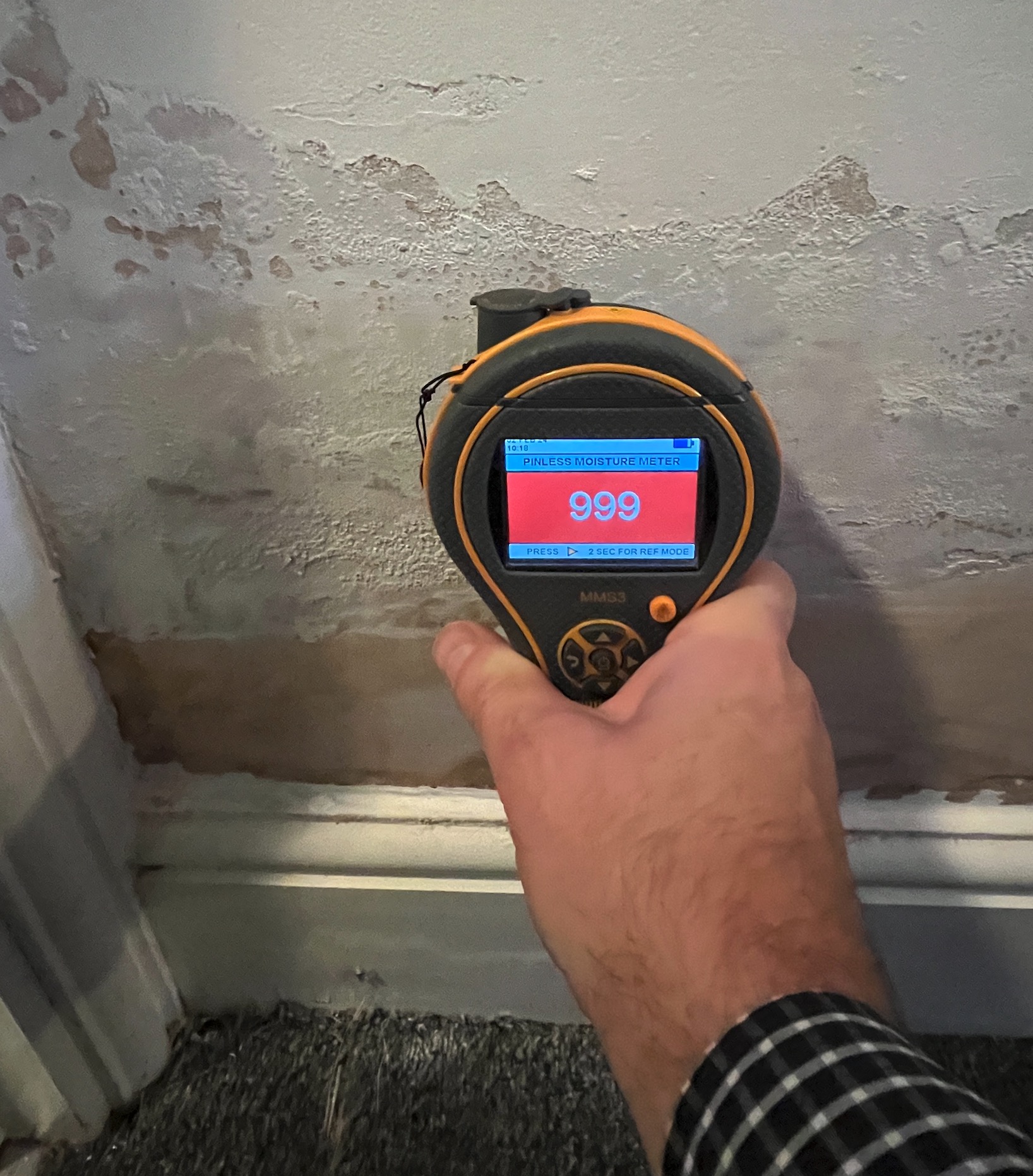
Another important point is that a surveyor is a building professional, but not a specialist in every technical discipline involved in a property. A surveyor is not a gas or heating engineer who can dismantle and test a boiler or verify the internal condition of flues. A surveyor is not an electrician carrying out electrical testing and certification. A surveyor is not a plumber performing pressure tests on pipework. Nor is a surveyor a chimney flue specialist inspecting internal flue linings, or a structural engineer calculating load paths and structural capacities. These areas require separate specialist qualifications and equipment. During a survey, services such as heating, electrics and plumbing may be observed in normal operation where possible, but they are not technically tested or certified.
Where a surveyor identifies a concern or where the nature of a building element requires more detailed examination, the appropriate recommendation is to seek further investigation from the relevant specialist. In this respect, it can be helpful to think of a building surveyor in a similar way to a general practitioner in medicine.
When you visit a GP, you do not expect them to perform heart surgery or conduct advanced cardiac imaging. Instead, the GP assesses your overall condition, identifies symptoms, and refers you to a specialist when deeper investigation is required. The GP’s role is to recognise risks and guide the next steps. A building survey works in a similar way.
The surveyor assesses the overall condition of the property, identifies visible issues, and highlights areas where further investigation may be required before committing to a purchase. The aim is to give buyers a clearer understanding of the building they are considering, the maintenance it may require, and any risks that may justify specialist inspections. Survey reports therefore provide professional opinions about the visible condition of the property, describe the construction where possible, identify significant defects, and indicate where further enquiries or investigations may be appropriate.
However, it is important to recognise that a survey represents a snapshot in time. It reflects the condition observed on the day of inspection and cannot predict every future issue or detect defects that are concealed within the structure or installations. Occasionally, issues are discovered after a property has been purchased which were not identified during the survey. This does not automatically mean that the survey was negligent. In many cases, the issue was hidden, inaccessible, intermittent, or outside the technical scope of a visual inspection. This is why survey reports often recommend further investigations before the exchange of contracts where uncertainty exists. Acting on those recommendations helps reduce risk and provides additional reassurance to the buyer.
Ultimately, the purpose of a survey is not to eliminate every possible uncertainty, which would be impossible without dismantling the building itself. Instead, its role is to provide an informed professional overview of the property's condition, highlight significant risks, and guide buyers towards any additional specialist assessments that may be appropriate.
When understood in this way, a survey becomes exactly what it is intended to be: a valuable decision-making tool that helps buyers approach a property purchase with greater awareness, rather than a promise that nothing hidden could ever exist.